

NEWSLETTER | ISSUE 6 | ISLA FEATURE
Defending our Gains: The CEVAWG Risks Regressing our Hard-Earned Wins
October 2026
By Wabia Nganatha Karugu
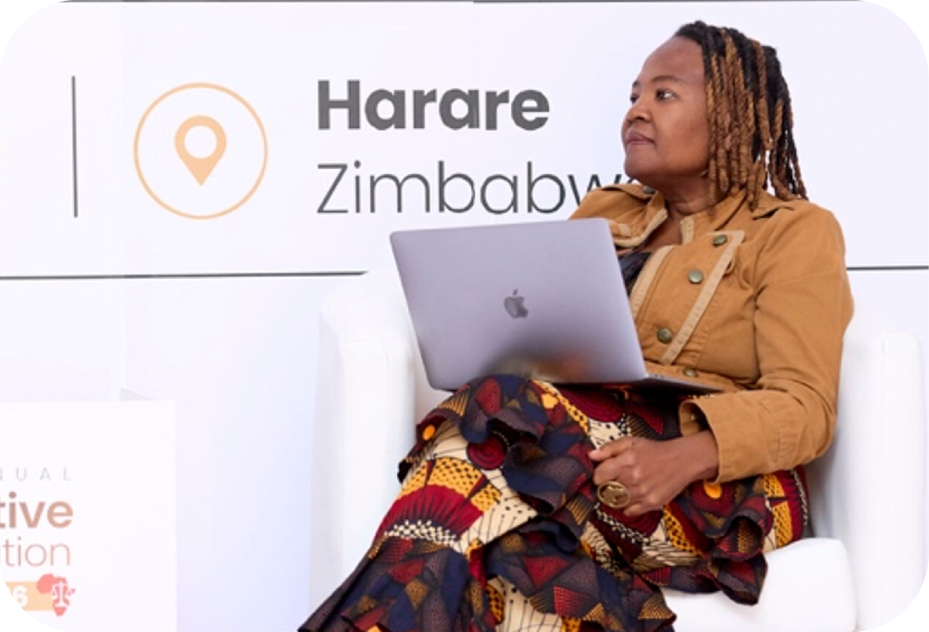
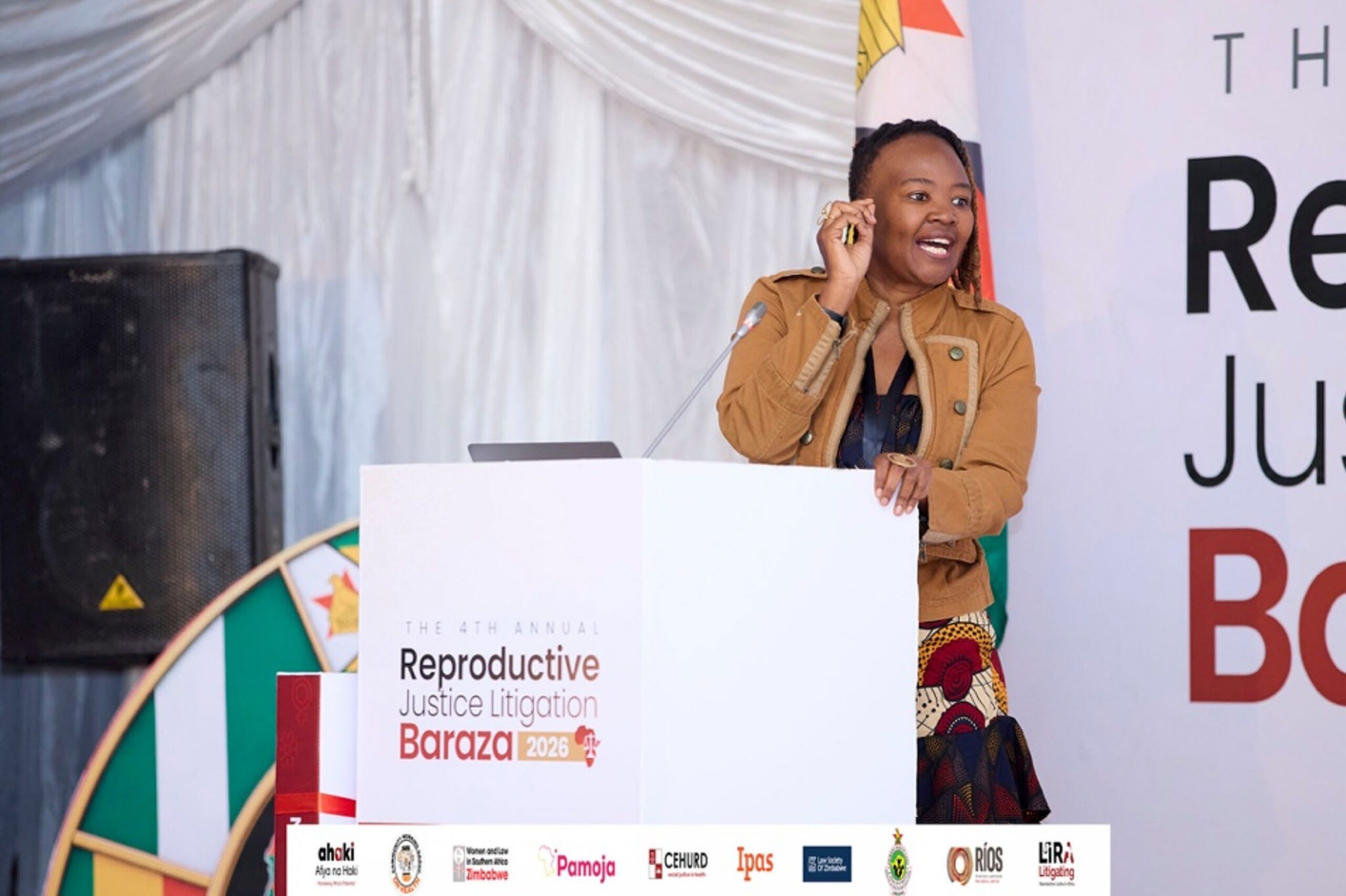
From 3-7 August 2026, ISLA, represented by Executive Director Sibongile Ndashe, attended Afya na Haki’s 4th Annual Reproductive Justice Litigation Baraza in Harare, Zimbabwe.
On Tuesday 3 August 2026, Sibongile joined panellists Honourable Commissioner Janet Ramatoulie Sallah-Njie and Brenda Akia in reflecting on Dr Tlaleng Mofokeng’s keynote address. Dr Tlaleng’s address drew inspiration from the Zimbabwean case of Mudzuru & Tsopodzi v Minister of Justice (the Mudzuru Case) in discussing age as a determinant of sexual and reproductive health and rights in Africa.
In reflecting on the Mudzuru Case – where the Constitutional Court of Zimbabwe found that any law that authorises child marriage is unconstitutional – Sibongile hailed the case as good feminist jurisprudence, jurisprudence that can only be possible where litigants can rely on international, regional, and national legal frameworks that are rights-based, align with normative standards, and are normatively coherent. This type of good feminist jurisprudence, however, cannot be possible with treaties like the African Union Convention on Ending Violence against Women and Girls (CEVAWG). Sibongile’s interventions were divided into 3 key aspects: clarity in drafting; the danger of gender-neutral frameworks; and defending our gains.
1.0. Clarify In Drafting
In the Mudzuru Case, the Constitutional Court of Zimbabwe points us to the intentional vagueness in the Convention on the Rights of the Child (CRC). The Court notes that ‘[t]he CRC… contains no explicit provision on marriage, which is odd, if not downright baffling… Article 1 of the CRC provides that ‘a child means every human being below the age of eighteen years, unless under the law applicable to the child majority is attained earlier’. The word ‘majority’ is deliberately not defined in the CRC and is left to local law to determine. Consider how problematic this provision is in the case of a married female child…. And indeed, many domestic laws explicitly provide that a person attains majority upon marriage regardless of her age’.
This lacuna in the CRC was cured on the regional level by the African Charter on the Rights and the Welfare of the Child (ACRWC). Sibongile noted that the CRC’s failure to define ‘majority’ is flagged by the Constitutional Court because of what the ramifications on the domestic level would then be – putting children and specifically girls in danger of child marriage. That is why the definitional problems in CEVAWG’s drafting are a serious cause for concern.
1.1. Family as defined by CEVAWG
CEVAWG in Article 1 defines family as ‘a natural and fundamental group or unit of society as defined or provided for by a State Party’.
The issue with this definition, as pointed out by Sibongile, is threefold. First, the definition fundamentally departs from accepted treaty-drafting practice by using definitional clauses not to clarify legal meaning, but to advance ideological positions and de-legitimise existing human rights standards.
Second, the Convention leaves the definition and provision of ‘family’ to states, thereby creating a pathway to restrictive national interpretations.
Third, CEVAWG creates a gateway to the Draft African Charter on Family, Sovereignty and Values (the Draft Charter). CEVAWG removes the provision of family from international law and leaves it to member states to provide for as they see fit; it gives states the leeway to define ‘family’ as they wish. The Draft Charter builds on this by permitting states to exercise their ‘sovereignty’ in disregard of foreign intervention or accountability to international or regional human rights standards. Laws relating to family – including probate, divorce, matrimonial property division, and domestic violence – run the risk of falling outside the purview of human rights standards. The ramifications of this are disastrous. In Mahmoud Abdelzaher’s article ‘New Pathways to Obscuring the Truth: Egyptian Family Values as a Justification for Publication Ban’, he writes that in April 2026, the Egyptian Public Prosecution (PP) issued an arrest warrant for individuals for breaching a publication ban issued by the PP. The publications related to ongoing investigations in four cases. Mahmoud writes that ‘[t]he first and second cases concern the rape of two sisters by their uncle…. the third case concerns an incident in which a father and grandfather sexually assaulted a young girl before killing her…
The final case… concerns the suicide of a woman who threw herself from the balcony of a building’. The PP provided that one of the reasons for the publication ban of these cases was that the circulation of the publications has ‘negative repercussions on the values of the Egyptian family’.
These are the early signs of the Draft Charter’s effect on the Continent, given that the Draft Charter expands sovereignty to justify extensive state control over a myriad of issues including family life. Additionally, the Draft Charter introduces a ‘family impact lens’ requiring laws and policies to be evaluated according to their impact on family stability, family cohesion, and family values.
“This will not be the last time that ‘family values’ will be used as a justification, defence or reason for rights violations, especially if the Draft Charter is adopted. The Draft Charter will create a pathway for more such justifications, and the CEVAWG creates the gateway to the Draft Charter and its regressive provisions,” warns Sibongile.
2.0. The Danger of Gender-Neutral Frameworks
Sibongile reflected that the Court in the Mudzuru Case affirms that ‘[t]here is need to fully acknowledge that a child’s gender can detrimentally affect the realisation of his or her right’. The Court cites Jewel Amoah’s article, providing that ‘[t]he failure to make specific reference to the girl–child and conditions that exacerbate her vulnerability is itself a form of discrimination against her… It is not enough that the language simply be gender–neutral, but where there are specific gendered human rights abuses, then these must be directly addressed’.
The Zimbabwean Constitutional Court acknowledges that gendered human rights abuses exist. Sibongile noted that this is something that many courts struggle to understand. “Courts struggle to understand the gender frameworks that are part and parcel of gendered human rights violations; therefore, having these gendered frameworks as part of treaties is useful in equipping litigators and judges with the tools that will lead to progressive judgements,” she reflected.
2.1. Gender-based violence as a form of discrimination
One such gender framework is gender-based violence (GBV) as a form of discrimination, which has become a normative standard. CEVAWG fails to ground the right to freedom from violence in the right to non-discrimination as recognised in the Convention on the Elimination of All Forms of Discrimination against Women (CEDAW) General Recommendations No. 19 and 35. CEVAWG’s failure to recognise GBV as a form of discrimination is a missed opportunity because without a non-discrimination clause, states may treat violence as a social or criminal issue rather than a structural human rights violation rooted in gender inequality, and will therefore not address it as such.
Our regional courts sometimes understand this framework and apply it well in their judgments. For instance, in Egyptian Initiative for Personal Rights and Interights v Egypt, the African Commission on Human and Peoples’ Rights (the Commission) held that the sexual assaults against the victims were acts of GBV (para 166). In J v Namibia, the Commission concluded that violence against women is discrimination. The Commission found that the State’s failure to act with due diligence to respond to violence committed by non-state actors amounted to discrimination and a violation of J’s rights (para 217). The ECOWAS Court of Justice (ECOWAS Court) in Dorothy Njemanze v Nigeria held that the treatment against the applicants by the State constituted gender-based discriminatory treatment (p. 41).
However, the courts do not always apply this framework as it should. In Equality Now and EWLA v Ethiopia, the Commission directed that the complainant must identify a comparator and show how the comparator’s treatment is comparable to that of the victim (para 147, 149, 150). This is a deviation from set normative standards on violence amounting to discrimination. The ECOWAS Court in Koraou v Niger declined to hold the State accountable for sexual slavery because the State did not make her a sexual slave, but it held the State accountable for slavery (p. 16). The Court also declined to hold the State accountable for the discrimination faced by Koraou (p. 15). In Mary Sunday v Nigeria, the ECOWAS Court concluded that the violence faced by the Plaintiff was in the private sphere, particularly in a family, and did not present any ‘general’ or ‘systemic’ aspects whatsoever and could therefore not be determined to be discrimination (p. 5). In E. I. v Nigeria, the ECOWAS Court failed to recognise violence in the private sphere as discrimination (p. 34).
2.2. Due Diligence Framework
The second gendered framework that a treaty on violence against women and girls ought to include is one on due diligence obligations. These due diligence obligations have also become a normative standard and are spelt out with great detail in the Guidelines on Combating Sexual Violence and its Consequences in Africa (popularly known as the Niamey Guidelines). Despite this being a normative standard, Sibongile flagged that there are no due diligence obligations of state parties to investigate, prosecute, punish and provide remedies in Article 5 of CEVAWG.
International law holds states responsible for direct acts of violence as well as omissions – including failures to prevent, investigate, or punish such acts. By not stipulating that states ‘shall exercise due diligence’ in relation to all forms of violence, CEVAWG allows impunity to persist. Having due diligence obligations spelt out in a treaty creates clarity on what states ought to do and equips litigators and judges with the tools required to hold states accountable for human rights violations.
In Egyptian Initiative for Personal Rights and Interights v Egypt, the Commission recognised that the Respondent State had a myriad of responsibilities connected to the violations that took place, including the ‘responsibility to provide a police force to protect the victims against violations of their rights during the protest, and the responsibility to put in place normative systems and institutions to maintain a system of justice that provides remedies for violations and imposes sanctions on violators’ (para 274). In J v Namibia, the Commission in its decision found that the Respondent State failed to conduct an effective investigation, prosecute and punish J’s perpetrators (para 217). In Dorothy Njemanze v Nigeria, the ECOWAS Court found that the failure of the State to investigate, discipline and prosecute the persons responsible for the violations is tantamount to a violation of the respondent’s international obligations (p. 41).
In Mary Sunday v Nigeria, the ECOWAS Court said that the private nature of the violent acts and their context within the couple’s household prohibits any connection with public authority (p. 5), therefore precluding any finding on the obligations owed by the State. The ECOWAS Court in E. I. v Nigeria also missed an opportunity to emphatically affirm the due diligence obligation of the State to protect women from violence, whether it’s from state or non-state actors (p.34).
3.0. Defending our Gains
“The Constitutional Court in the Mudzuru Case highlights CRC’s failure to explicitly mention child marriage,” said Sibongile. She reflected that the Court goes on to applaud Article 21 of the ACRWC, which provides that ‘[c]hild marriage and the betrothal of girls and boys shall be prohibited and effective action including legislation, shall be taken to specify the minimum age of marriage to be 18 years’. The Court noted that ‘Article 21(2) of the ACRWC avoided the omissions and exceptions that the other conventions on human rights relating to marriage had permitted States Parties to exploit through local laws that authorised child marriage’. Sibongile lauded the Constitutional Court’s declaration that child marriage is unconstitutional.
Despite child marriage being a harmful practice, one of the most rampant on the Continent, CEVAWG makes absolutely no mention of child marriage, nor does it specify state obligations to ensure its elimination. CEVAWG even excludes other widespread forms of GBV in Africa, such as female genital mutilation and conflict related sexual violence.
CEVAWG has not only taken us steps back because of its gaping holes. It is also taking us back to a time we thought we had moved past. When we see a definition of family that includes ‘as provided for or defined by State Parties’, it fills us with dread. We have been here before. The effective removal of a family from the protection of international law is not a minor detail”, reflects Sibongile.
African Women have used international law to fight back against the subordination of women and regressions in national laws. Clawback clauses in the first wave of African constitutions exempted personal, customary, or religious laws from constitutional guarantees of equality. This limited women’s rights in areas such as marriage, inheritance, and property. For instance, in Zambia’s 1996 Constitution, Article 23(4)(c) provided that protection from discrimination in the law does not apply to provisions in legislation ‘with respect to adoption, marriage, divorce, burial, devolution of property on death or other matters of personal law’. In the second and third wave constitutions, these provisions which limited women’s rights were removed from our Constitutions. Only one country still retains this: Gambia.
CEVAWG’s definition does more harm than the clawback clauses in post-independence constitutions. It removes family from the protection of international law and leaves it to member states to define or protect.
We were greatly inspired by the successes of Unity Dow in Botswana, who challenged laws that prevented women from conferring nationality on their children; in Eswatini, Doo Aphane challenged the prevention of married women from registering property jointly; and in Zimbabwe, Margaret Dongo went to court to stop the practice that only fathers could assist minor children in applying for passports. Dr Priye Iyalla-Amadi litigated against immigration, challenging a law requiring married women to submit a letter of consent from their husbands to process their passports. What these African women had in common was that they used international law to challenge discriminatory national laws.
Sibongile ended her address with a call to defend the human rights gains feminists and human rights activists have made over the years: “We can’t fight this fight again. We still have family laws that discriminate against women and girls, which we must continue to fight against. We also face new threats from anti-rights actors who pursue their version of sovereignty, which holds that international law must not apply in family law matters. We need to fight for strong regional treaties to give us the tools to continue to create strong feminist jurisprudence on the Continent both at a national and regional level”.