

NEWSLETTER | ISSUE 6 | ISLA IN THE SPOTLIGHT
ISLA In The Spotlight
Advancing Economic Justice in Divorce: Constitutional Court Ruling on Pension Sharing
Sibongile Ndashe unpacks the Constitutional Court’s ruling declaring Section 7(7)(c) of South Africa’s Divorce Act unconstitutional, a significant step towards addressing discrimination against economically weaker spouses, particularly women. She explains how the ruling opens the door for spouses married out of community of property without accrual to claim a share of their spouse’s pension, provided they demonstrate their direct or indirect contributions and that denying them a share would be unjust. The judgment recognises both financial and non-financial contributions, including caregiving and maintaining the home, advancing a more equitable approach to divorce and economic justice.
Divorce, Pensions and Gender Equality: Challenging Discrimination in South African Law
Sibongile Ndashe discusses the challenge to South Africa’s Divorce Act, highlighting its discriminatory impact on economically weaker spouses, particularly women, and the unequal treatment of couples married out of community of property without accrual. She unpacks the constitutional implications of these exclusions and how the proposed General Family Laws Amendment Bill could address these injustices and strengthen economic equality in divorce law.
Sibongile Ndashe On Gender-Based Violence and the Implementation of the Law
Following President Cyril Ramaphosa’s address on gender-based violence, Sibongile Ndashe discussed the gap between South Africa’s legal protections and the protection experienced by women and girls on Ukhozi FM. She stressed the importance of implementing existing laws and ensuring accountability.
30 Years of Constitutional Democracy: Why South Africa’s Progressive Laws Have Failed GBV Survivors
In a discussion on gender-based violence (GBV), Sibongile Ndashe – while reflecting on 30 years of the implementation of the Constitution of South Africa – offers critical insights into why South Africa’s progressive laws and jurisprudence have not translated into effective protection and justice for GBV survivors.
ISLA Participates in Southern Africa Human Rights Convening
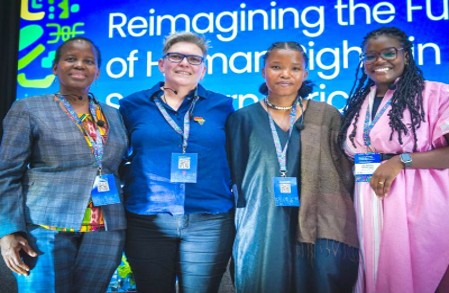
From 26 to 28 August 2026, ISLA’s Collaborations Manager, Mai Aman, participated in the Reimagining the Future of Human Rights in Africa: Southern Africa Convening in Gaborone, Botswana. Convened by Open Society-Africa and partners, the gathering brought together human rights actors to examine emerging threats to human rights protection, including the growing influence of anti-rights movements across the region. ISLA contributed to a discussion on gender and identity within African contexts, exploring how concepts such as African values, family and sovereignty are increasingly used in debates about human rights. The discussions considered how African-centred approaches to justice can protect the rights and dignity of women, children, refugees, persons with disabilities and LGBTQ+ persons while addressing tensions between cultural practices and gender equality.
ISLA And FIDA-Kenya Intervene in Constitutional Litigation Concerning FGM Survivors
August 2026 | Kenya
ISLA and the Federation of Women Lawyers in Kenya (FIDA-Kenya) were admitted as joint amici curiae in a constitutional petition before the High Court in Narok concerning the treatment of survivors of female genital mutilation (FGM) within the criminal justice system. The petition challenges the forced genital examinations conducted on survivors and the subsequent use of medical evidence obtained through those examinations to prosecute them under Kenya’s Prohibition of FGM Act. ISLA and FIDA-Kenya’s intervention focuses on the state’s obligation to protect women from violence, safeguard survivors within criminal proceedings and adopt a survivor-centred approach to law enforcement. On 14 August 2026, the Court certified that the petition raised substantial questions of constitutional law and referred it for consideration by a bench of at least three judges. The case raises broader questions about bodily autonomy, privacy, fair-trial rights and the risk of criminalising survivors of harmful practices.
ISLA Contributes to Feminist Discussion on Responses to Gender-Based Violence
On 11 August 2026, ISLA’s Violence Against Women Lawyer, Achieng Orero, was announced as a participant in a webinar organised by the Just Futures Collaborative examining feminist approaches to addressing gender-based violence. The discussion explored differing perspectives on the effectiveness of criminal justice responses, particularly policing and imprisonment, in preventing violence and securing justice for survivors. It also considered alternatives that centre survivors’ needs while addressing the structural causes of violence. ISLA’s involvement in the discussion formed part of wider feminist conversations about accountability, prevention and the relationship between criminal justice systems and survivor-centred protection.

30 Years of South Africa’s Constitution: Bridging the Gap Between Legal Protections and Justice for GBV Survivors
Reflecting on 30 years of South Africa’s Constitution, Kholekile Mnisi and Lebone Rodah Mosima explore Sibongile Ndashe’s analysis of the gap between the country’s progressive legal framework and the lived realities of survivors of gender-based violence. Sibongile examines why strong laws and jurisprudence have not translated into effective protection, accountability and access to justice for survivors, highlighting the systemic barriers that continue to undermine the realisation of their rights.
Proposed African Charter on Family Sovereignty and Values Raises Concerns Over Women’s Rights and Human Rights Protections
Global health, legal and gender rights experts urge African governments to reject the proposed Draft African Charter on Family, Sovereignty and Values (the Draft African Charter), warning that it could undermine progress on gender equality, sexual and reproductive health rights, and broader human rights protections. Sibongile Ndashe highlights the findings of ISLA’s analysis, arguing that while the Draft African Charter retains rights-based language, it weakens substantive protections by invoking sovereignty to evade accountability, family protection to justify exclusion, and culture to restrict equality.
Related articles on the proposed African Charter and its implications for human rights: