

NEWSLETTER | ISSUE 6 | ACTIVIST SPOTLIGHT
Nerima Were – Lawyer and Advocate of the High Court of Kenya: The Person Behind the Work
October 2026
1. To start us off, could you tell us a bit about yourself? Who is Nerima Were, both personally and professionally?
I am Nerima Were. The identities that are most permanent for me are feminist, Pan-Africanist and socialist, in that order. They shape the lawyer, teacher, advocate, leader, and mother I am because they influence how I understand the world and how I choose to engage with it.
Professionally, I am a lawyer and an Advocate of the High Court of Kenya. I studied law at the University of Pretoria, where I completed both my undergraduate and master’s degrees. I was fortunate to spend part of my early career working in South Africa, including at the Constitutional Court and the Land Claims Court. Those experiences gave me a deeper appreciation of how law operates in people’s lives. They also taught me that courts are often spaces where people seek not only a legal outcome, but also a forum to be heard. They reinforced that justice is not always easily achieved through law, and that lawyers sometimes have to think beyond what the law itself offers.
Personally, I am also a mother, and I am trying to grow into leadership in the different spaces I occupy. This year I started going to the gym and also started a law firm, both of which have pushed me in new ways. I love football, especially Arsenal, and I enjoy how football creates an easy point of connection with people. I have also always enjoyed reality television, although perhaps a little less as I get older, and on a good day I can be something of an internet troll, especially when football or politics is involved.
2. What first drew you into the world of human rights, and what continues to inspire your work today?
My first encounters with injustice came quite early. As the youngest of three children and the only girl, I noticed early on that people at home held different expectations for me simply because I was a girl. I remember being made to learn domestic tasks while my brothers were free to play, and I had a very strong sense that something about that was unfair. At the time, I didn’t have the language for it, but over the years I began to encounter feminist ideas in the books I read and, later, in university. In my third year, when I studied jurisprudence and feminist legal theory, everything clicked. I finally had language for something I had felt for years.
A broader frustration with injustice also shaped my decision to study law. I remember following the debates around the United States war in Iraq and the role of the United Nations Security Council, and thinking that something was fundamentally wrong with an international legal order in which powerful states could apparently set aside rules. I wanted to understand how these systems worked, what was wrong with them, and who they were really designed to protect. Law became a framework through which I could interrogate power, oppression and the structures that sustain them.
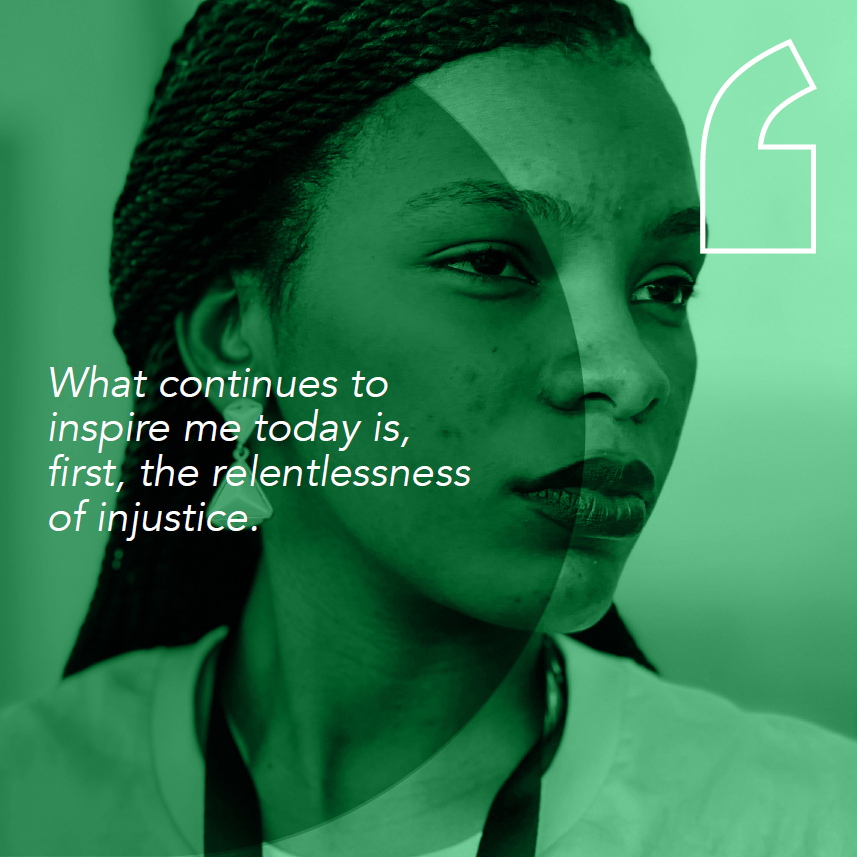
What continues to inspire me today is, first, the relentlessness of injustice. Despite all the rights frameworks, constitutions and legal protections we have developed, we continue to see war, violence, rape and other forms of injustice on both a global and everyday scale. That reminds me that there is still an enormous amount of work to be done.
The second thing is hope. The 2024 Finance Bill protests in Kenya were a major moment for me because I saw political consciousness, courage and a strong sense of justice among a younger generation. I have also seen similar conversations and movements emerging elsewhere. That has made me more hopeful about the possibility of building solidarity across movements. I increasingly think about how feminist movements, labour movements and other struggles can speak to one another, because the structures of oppression we are confronting are connected. That possibility of broader solidarity is one of the things inspiring my work now.
Despite all the rights frameworks, constitutions and legal protections we have developed, we continue to see war, violence, rape and other forms of injustice on both a global and everyday scale. That reminds me that there is still an enormous amount of work to be done.
3. You made a notable shift from academia into the civil society space. What motivated that transition, and was there something specific you hoped to achieve through it? Looking back, do you feel you accomplished what you set out to do?
For me, it was not really a shift from academia into civil society because those parts of my career have always coexisted. I have occupied academic and civic spaces at the same time, and I have always valued what each can contribute to the other.
Looking back, I would not say that I have accomplished everything I set out to do. There is still far too much to do, both in the world and in my own development as a feminist activist and lawyer. The last two years in particular have pushed me to think beyond what I sometimes describe as the feminist cocoon. I am increasingly asking what it means to build meaningful solidarity with people and movements that do not necessarily begin from the same feminist framework, but whose struggles are connected to ours.
I also want to make the space easier for younger feminists entering the movement. Any movement can become difficult for newcomers, and I think ideas and help can make it easier to move through the periods of disillusionment that inevitably come with this work.
One thing I am trying to build now is a feminist, movement-centred strategic litigation law firm. I want to work with movements in a way that treats strategic litigation as a means towards justice rather than as the goal itself. I have seen what can happen when litigation strategies become disconnected from the movements and communities they are meant to serve. I want to explore a model of legal practice that remains grounded in movement priorities and relationships.
So no, I do not feel finished. I still have substantive goals about the kind of feminist future I want to contribute to, and I also have what I jokingly call vanity goals, such as becoming Senior Counsel one day. Most importantly, I still want to help build spaces and institutions that make justice more possible.
4. During your time at ISLA, what aspects of the work made it particularly meaningful for you? Was there a project or moment that stands out as especially impactful?
What made ISLA particularly meaningful for me was that it didn’t constantly feel like I had to fight to exist. Before ISLA, much of my professional experience had been in spaces led primarily by men. ISLA was different because it was not only committed to creating a home for women in the workplace, but also to asking what it actually means to build a feminist workplace.
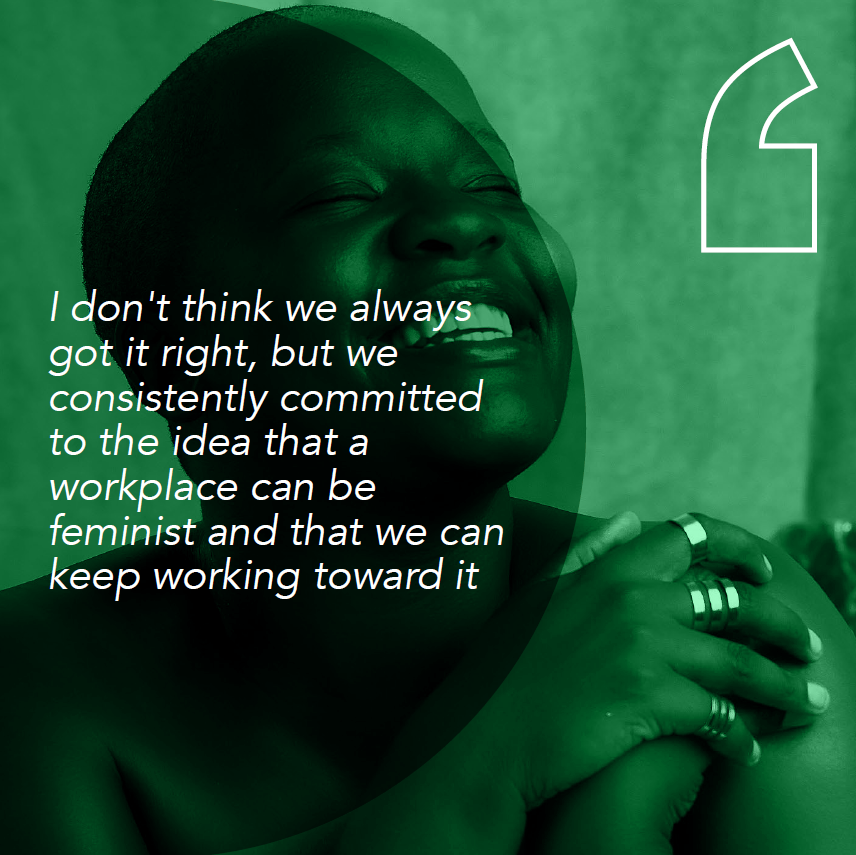
I don’t think we always got it right, but we consistently committed to the idea that a workplace can be feminist and that we can keep working toward it. For me, that meant more than flexible hours or similar practical arrangements. It was about collaboration, sharing information, making sure people had the tools they needed to succeed, and creating an environment where smart and competent people weren’t simply expected to thrive despite the system around them. Work should not come at the cost of your soul, your health, or your well-being. In that sense, ISLA often felt like a small piece of resistance to the conventional idea of what work has to be.
For me, that meant more than flexible hours or similar practical arrangements. It was about collaboration, sharing information, making sure people had the tools they needed to succeed, and creating an environment where smart and competent people weren’t simply expected to thrive despite the system around them. Work should not come at the cost of your soul, your health, or your well-being. In that sense, ISLA often felt like a small piece of resistance to the conventional idea of what work has to be.
5. As you reflect on your journey so far, what lessons or insights do you feel are most important for emerging scholars or human rights defenders entering the human rights field today?
The first is hope. Hope is good, and it will carry you further than knowledge alone. The future that we imagine and work towards is difficult to reach, and you will often find yourself battling powerful institutions and sometimes even people who would benefit from the change you are seeking. Do not limit your dreams to the reality you have been given. Dream as expansively as possible. Even if you do not see the full result in your lifetime, hope gives you a reason to keep moving towards it.
The second is not to limit yourself to the rights framework or to a single way of understanding the world. Human rights discourse is important, but it is not the only knowledge system available to us. Learn from other movements, disciplines and ways of thinking. Ask what trade unionists are doing, what other movements are doing, and where we can build solidarity. We can easily fall into echo chambers where we keep talking to people who already agree with us. If we want to move the needle, we have to engage beyond those spaces, critically and with humility, and think about how our different struggles can contribute to one another’s liberation.
Finally, find joy in the work because the journey is long. You may not always see the result you want, so find joy in building something, learning something, and knowing the work itself has value. Joy can also be a form of resistance. The fact that you cannot immediately see the outcome does not mean what you are doing is meaningless; it simply means there is still work to be done. Find the things that sustain you and keep building towards the change you want to see.
Interview conducted by Rutendo Mugabe