

NEWSLETTER | ISSUE 6 | ISLA FEATURE
The Backlash Has Lawyers. So Do We. Inside ISLA’s inaugural CARA Litigation Institute
October 2026
By Lakshita Kanyiha
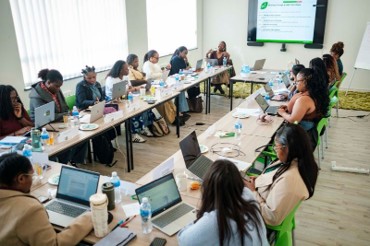
Anti-rights actors have learned the language of rights. They invoke ‘family’, ‘freedom’, ‘culture’, ‘tradition’ and even human rights themselves while working to narrow the very protections those concepts should secure. The question for feminist litigators is therefore no longer simply whether law can be weaponised against rights. It is whether we are organised, politically sharp and legally audacious enough to fight back. From 6–17 July 2026 in Johannesburg, ISLA convened the inaugural Countering Anti-Rights Actors (CARA) Litigation Institute, bringing together lawyers from the Feminist Litigation Network (FLN) for two intensive weeks of political education, substantive legal analysis and litigation practice. The Institute began from a proposition fundamental to ISLA’s feminist lawyering: law is not neutral. It reflects and reproduces patriarchy, ableism, xenophobia and economic inequality, even as feminist movements strategically deploy it to disrupt those same structures. CARA therefore refused the comfort of treating anti-rights mobilisation as a collection of isolated bad cases or unfortunate legal arguments. FLN lawyers interrogated the ecosystem: the actors, networks, ideologies, narratives and institutional pathways through which anti-rights politics travel across jurisdictions and rights struggles.

And then we got into the law.
FLN lawyers dissected lawfare and the distortion of human rights, examining how courts, legislatures, regional institutions and rights language itself can be strategically deployed to produce regressive outcomes. They grappled with freedom of expression, including the manufactured opposition between free speech and equality, victimhood inversion and attempts to divorce harmful speech from material harm. The right to family demanded an equally uncompromising feminist interrogation. FLN lawyers examined how ‘family values’, culture, tradition and morality are mobilised to restrict rights, including through debates concerning no-fault divorce and the Draft African Charter on Family, Sovereignty, and Values. The strategic question was critical: how do we defend family rights without sacrificing the autonomy, dignity and equality of the individuals within families? But feminist litigation cannot survive on analysis alone. CARA moved deliberately from politics to practice: strategic litigation design, case selection, remedies, movement alignment, costs and adverse-cost risks, amicus drafting, written and oral assessments, and finally, the moot court. That progression matters. We are not training FLN lawyers merely to recognise regression after it arrives at the courthouse door. We are building feminist litigators capable of reading power before it becomes precedent.

The inaugural CARA Institute marks the beginning of a longer body of work within the FLN to strengthen collective feminist responses to anti-rights mobilisation. At a moment when anti-rights actors are coordinated, resourced and increasingly sophisticated, feminist lawyering cannot afford to be timid, siloed or purely reactive. They are organising. So are we. And we intend to litigate accordingly.
FURTHER READING: ISLA website: CARA Feminist Litigation Institute press release